
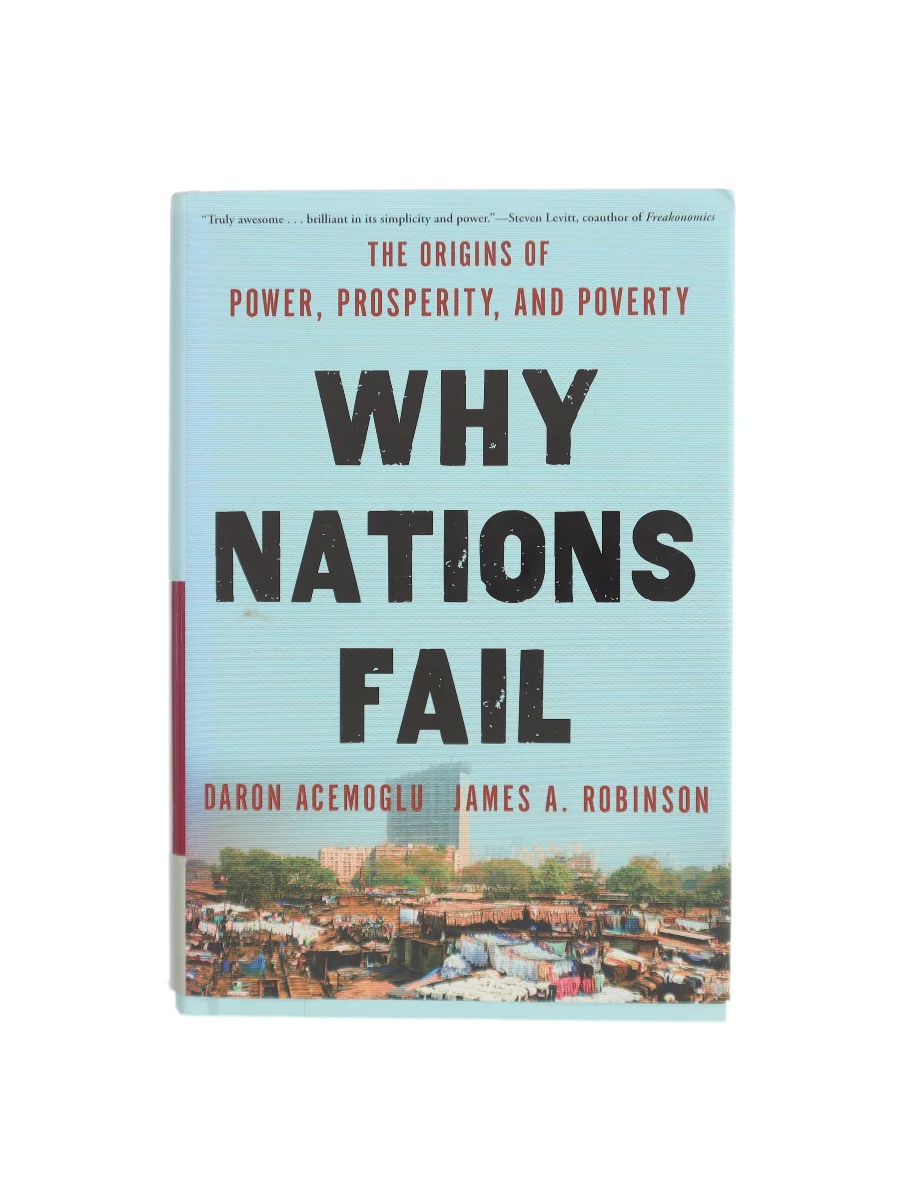
Billederne viser det faktiske produkt
Why nations fail : the origins of power, prosperity and poverty af Daron Acemoglu (Bog)
59,50 kr.
Sprog: Engelsk
Antal sider: 529
Forlag: CROWN Business
Udgivelsesår: 2012
NEW YORK TIMES AND WALL STREET JOURNAL BESTSELLER • From two winners of the 2024 Nobel Prize in Economic Sciences, “who have demonstrated the importance of societal institutions for a country’s prosperity” “A wildly ambitious work that hopscotches through history and around the world to answer the very big question of why some countries get rich and others don’t.”—The New York Times FINALIST: Financial Times and Goldman Sachs Business Book of the Year Award • ONE OF THE BEST BOOKS OF THE YEAR: The Washington Post, Financial Times, The Economist, BusinessWeek, Bloomberg, The Christian Science Monitor, The Plain Dealer Why are some nations rich and others poor, divided by wealth and poverty, health and sickness, food and famine? Is it culture, the weather, or geography that determines prosperity or poverty? As Why Nations Fail shows, none of these factors is either definitive or destiny. Drawing on fifteen years of original research, Daron Acemoglu and James Robinson conclusively show that it is our man-made political and economic institutions that underlie economic success (or the lack of it). Korea, to take just one example, is a remarkably homogenous nation, yet the people of North Korea are among the poorest on earth while their brothers and sisters in South Korea are among the richest. The differences between the Koreas is due to the politics that created those two different institutional trajectories. Acemoglu and Robinson marshal extraordinary historical evidence from the Roman Empire, the Mayan city-states, the Soviet Union, the United States, and Africa to build a new theory of political economy with great relevance for the big questions of today, among them: • Will China’s economy continue to grow at such a high speed and ultimately overwhelm the West? • Are America’s best days behind it? Are we creating a vicious cycle that enriches and empowers a small minority? “This book will change the way people think about the wealth and poverty of nations . . . as ambitious as Jared Diamond’s Guns, Germs, and Steel.”—BusinessWeek
Titel: Why nations fail : the origins of power, prosperity and poverty
Forfattere: Daron Acemoglu,James A. Robinson
Udgave: 1. udgave
Sammendrag: Why Nations Fail præsenterer en samlet teori om, hvorfor nationer udvikler sig så forskelligt økonomisk og politisk. Udgangspunktet er, at forskelle i politiske og økonomiske institutioner – om de er inkluderende eller ekstraktive – forklarer forskelle i velstand, innovation og stabilitet. Bogen gennemgår historiske og moderne eksempler, hvor eliter fastholder magt gennem undertrykkende institutioner, og kontrasterer disse med samfund, der opbygger bred deltagelse, retssikkerhed og incitamenter til investering og uddannelse. Forfatterne diskuterer blandt andet England og Den Glorværdige Revolution, USA’s udvikling, Latinamerikanske kolonier, apartheid i Sydafrika samt nutidige autoritære regimer. De afviser forklaringer baseret på kultur, geografi og klima som tilstrækkelige og argumenterer i stedet for, at institutioner formes af politiske konflikter og magtkampe. Bogen sigter mod både forskere, studerende og almindeligt samfundsinteresserede læsere.
Type: Hardcover
Spørgsmål og svar
Er varen ny?
Orderly sælger gode varer fra folk, som ikke selv har tid, lyst eller mulighed for at gøre det. Vores varer er derfor typisk brugte og dermed billigere end nyt. Og så er de bedre for miljøet.
Hvordan vurderer I standen?
Vi vurderer varen ud fra synligt slid og det samlede indtryk. Vi tester ikke elektronik eller tæller brikkerne i et puslespil inden salg. Vi formidler salget mellem køber og sælger. Men er der problemer med en vare, finder vi altid en løsning - med eller uden sælger.
Jeg glemte en ting. Kan jeg tilføje til min ordre?
Ja, det kan du sagtens - helt indtil vi starter pakningen af din ordre. Du laver bare en ny ordre og vælger den eksisterende ordre som levering (hvor du normalt vælger GLS eller afhentning). I sjældne tilfælde kan det dog forlænge leveringstiden med en dag.