Professor Carr shows that the 'facts' of history are simply those which historians have selected for scrutiny, and all historical facts come to us as a result of interpretative choices by historians influenced by the standards of their age. Type: Paperback
What is the use of social theory to historians, and of history to social theorists? In clear and energetic prose, a pre-eminent cultural historian here offers a far-reaching response to these deceptively simple questions. In this classic text, now revised and updated in its second edition, Peter Burke reviews afresh the relationship between the fields of history and the social sciences and their tentative convergence in recent decades. Burke first examines what uses historians have made - or might make - of the models, methods, and concepts of the social sciences, and then analyzes some of the intellectual conflicts, such as the opposition between structure and human agency, which are at the heart of the tension between history and social theory. Throughout, he draws from a broad range of cultures and periods to illustrate how history, in turn, has been used to create and validate social
Historien som værk Værkets historie En del af fagområderne Filosofi og etik og Kunst og æstetik Køb bog inkl. e-bog : 328,00 kr. Køb e-bog : 249,95 kr. 305 sider ill. Hardback Udgivet 2. juni 2006 ISBN 87 7934 166 7 Af Dorthe Jørgensen Del: Mere om bogen Om bogen Om bogen Vi har ingen tradition for filosofisk æstetik i Danmark. Da den filosofiske æstetik er filosofien om den æstetiske erfaring forstået som en form for sand erkendelse, er det en hel erkendelsesteori, vi savner. Det er oven i købet en væsentlig del af vor erfaringsverden, vi dermed forsømmer at reflektere systematisk over. For æstetiske erfaringer er meget mere end sanselige oplevelser af lækre former. Æstetiske erfaringer åbner verden på en måde, så vi fornemmer dimensioner, vi i almindelighed bare overser. I Historien som værk viser Dorthe Jørgensen, at den filosofiske æstetik derfor ikke kun er relevant for æstetikere.
En indføring i væsentlige sider af historiefaget: kildekritik, periodisering, fagets betydning, og hvordan man kan arbejde med faget i ungdomsuddannelserne Forlag: Systime Udgivelsesår: 2005 Sider: 68 Sprog: Dansk
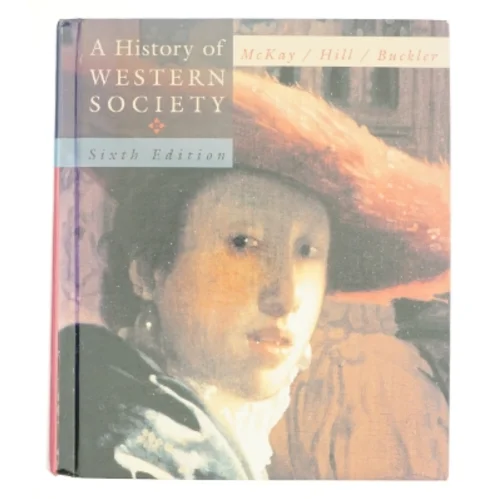
Hardcover book. 1064 pages. Published by Bedford/Saint Martin's (1999). Forlag: Houghton Mifflin Udgivelsesår: 1999 Sider: 1064 Sprog: Engelsk
Fresh, original and compelling, "An Introduction to Literature, Criticism and Theory "is the essential guide to literary studies. Starting at 'the beginning' and concluding with 'the end', the book covers topics that range from the familiar (character, narrative, the author) to the more unusual (secrets, pleasure, ghosts). Eschewing abstract "isms," Bennett and Royle successfully illuminate complex ideas by engaging directly with literary works - so that a reading of "Jane Eyre" opens up ways of thinking about racial difference, whilst Chaucer, Raymond Chandler and Monty Python are all invoked in a discussion of literary laughter. Each chapter ends with a narrative guide to further reading and the book also includes a glossary and bibliography. The fourth edition has been revised to incorporate two timely new chapters on animals and the environment. A breath of fresh air in a field that
The past remains essential - and inescapable. A quarter-century after the publication of his classic account of man's attitudes to his past, David Lowenthal revisits how we celebrate, expunge, contest and domesticate the past to serve present needs. He shows how nostalgia and heritage now pervade every facet of public and popular culture. History embraces nature and the cosmos as well as humanity. The past is seen and touched and tasted and smelt as well as heard and read about. Empathy, re-enactment, memory and commemoration overwhelm traditional history. A unified past once certified by experts and reliant on written texts has become a fragmented, contested history forged by us all. New insights into history and memory, bias and objectivity, artefacts and monuments, identity and authenticity, and remorse and contrition, make this book once again the essential guide to the past that we