Inside the Doomsday Machine Forlag: Penguin Books Ltd. Udgivelsesår: 2015 Sider: 270 Sprog: Engelsk
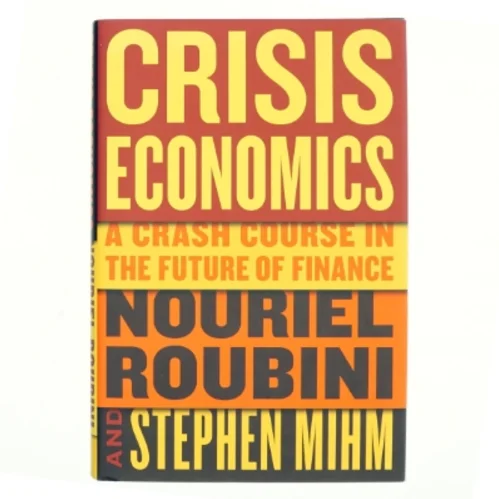
A Crash Course in the Future of Finance One man saw it coming. As far back as 2005, Professor Nouriel Roubini - aka 'Dr Doom' - warned that the US housing bubble was set to crash, and what would begin as a national disease would soon spread overseas resulting in a deep recession. Free market fundamentalism would fail and we'd be faced with the worst economic crisis in history, crippling our global economy and bringing the world's financial systems to a shuddering halt. Sound familiar? By guiding us through a crash course in 'crisis economics' - black swans and white swans, pressure points in the global economy, crises that extend beyond national borders and bubbles in the financial sector that spill over into the real economy - Roubini shows us that boom to bust economics does not have to be destiny. Roubini offers a course for the future: radical reform of the international financial or
Looks at the ways that current dramatic shifts in the domestic and global economy have their roots in the 2008 economic crisis and its aftermath, exploring novel themes in the way the crisis has played out for the past decade and will influence the future Titel: Crashed : how a decade of financial crises changed the world Udgave: 1. udgave Genre: erhverv_oekonomi_ledelse Sammendrag: En omfattende analyse af den globale finanskrise i 2008 og dens eftervirkninger gennem det følgende årti. Adam Tooze gennemgår begivenhederne omkring bankkrak, statslige redningspakker, eurokrisen, Kinas rolle i verdensøkonomien og de politiske konsekvenser i USA og Europa. Bogen sætter finanskrisen ind i en større geopolitisk og historisk sammenhæng og undersøger, hvordan økonomiske chok ændrede internationale magtforhold og den politiske dagsorden i det 21. århundrede. Type: Hardcover
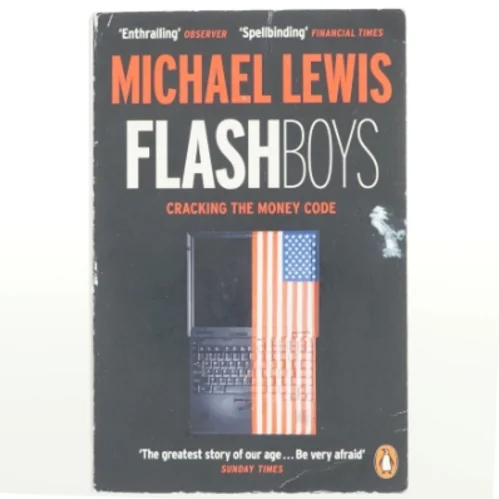
Cracking the Money Code Michael Lewis, the Master of the Big Story, is back with Flash Boys. If you thought Wall Street was about alpha males standing in trading pits hollering at each other, think again. That world is dead. Now, the world's money is traded by computer code, inside black boxes in heavily guarded buildings. Even the experts entrusted with your cash don't know what's happening to it. And the very few who do aren't about to tell - because they're making a killing. This is a market that's rigged, out of control and out of sight; a market in which the chief need is for speed; and in which traders would sell their grandmothers for a microsecond. Blink, and you'll miss it. In Flash Boys, Michael Lewis tells the explosive story of how one group of ingenious oddballs and misfits set out to expose what was going on. It's the story of what it's like to declare war on some of the ri
A Financial History of the World Hardcover book. Published by Penguin Books, Limited (2008). Forlag: Allen Lane Udgivelsesår: 2008 Sider: 441 Sprog: Engelsk
What We've Learned - And Have Still to Learn - From the Financial Crisis Martin Wolf believes that too much has been said about the purely financial aspects of the economic crisis, important though they are. The actual underlying problem, as this radical new book argues, is that the world economy is unable to cope with the huge shifts it is undergoing: rapid economic integration; competition from billions of new workers; technological revolutions; and huge floods of capital across the world. With those shifts have come vast and largely unforeseen financial shocks. from the publisher Forlag: Allen Lane Udgivelsesår: 2014 Sider: 464 Sprog: Engelsk Emneord økonomi finans krise
Confidence, Crashes and Self-Fulfilling Prophecies "Of all the economic bubbles that have been pricked," the editors of The Economist recently observed, "few have burst more spectacularly than the reputation of economics itself." Indeed, the financial crisis that crested in 2008 destroyed the credibility of the economic thinking that had guided policymakers for a generation. But what will take its place? In How the Economy Works, one of our leading economists provides a jargon-free exploration of the current crisis, offering a powerful argument for how economics must change to get us out of it. Roger E. A. Farmer traces the swings between classical and Keynesian economics since the early twentieth century, gracefully explaining the elements of both theories. During the Great Depression, Keynes challenged the longstanding idea that an economy was a self-correcting mechanism; but his schoo
*NO.1 SUNDAY TIMES BESTSELLER* 'An unforgettable story of greed, financial madness and moral decay' Rory Stewart 'Hilarious, shocking and deeply sad — often in the same sentence' Sunday Times 'The Wolf of Wall Street with a moral compass' Irvine Welsh An outrageous, white-knuckle journey to the dark heart of an intoxicating world - from someone who survived the trading game and then blew it all wide open 'If you were gonna rob a bank, and you saw the vault door there, left open, what would you do? Would you wait around? Ever since he was a kid, kicking broken footballs on the streets of East London in the shadow of Canary Wharf's skyscrapers, Gary wanted something better. Something a whole lot bigger. Then he won a competition run by a bank: 'The Trading Game'. The prize: a golden ticket to a new life, as the youngest trader in the whole city. A place where you could make more money than